


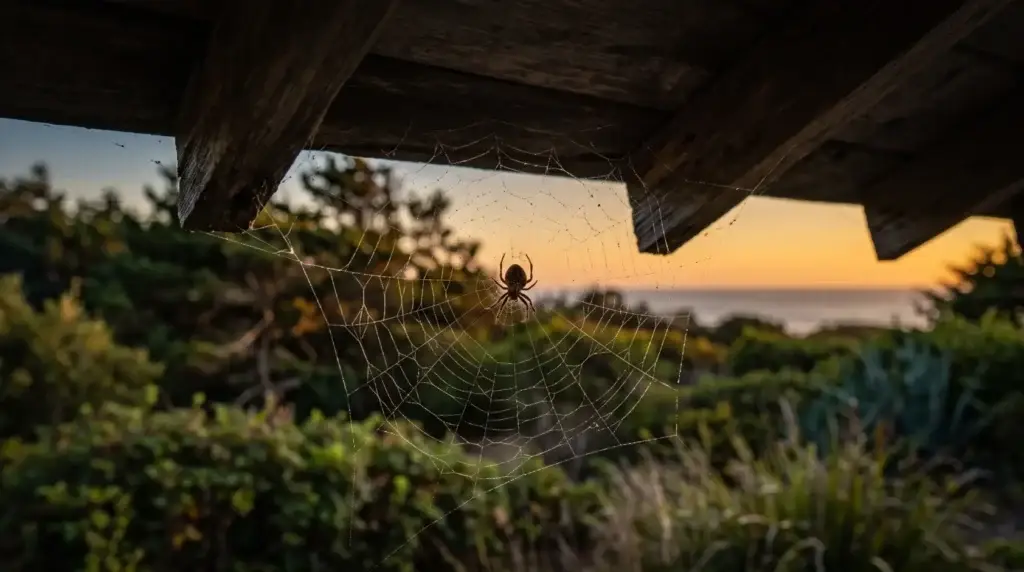
Why Fall Is Spider Season, Not Just Spiderweb Season
Most people notice more webs in October and assume spiders are simply “more active” in fall. What’s actually happening is a population bloom: spiders that hatched in spring and spent summer maturing reach adulthood around the same time, and mature spiders build larger, more visible webs while actively searching for mates. The result is a sudden jump in both web density and spider sightings over a few weeks, concentrated in exactly the outdoor spaces Atlantic Beach homes use year-round — eaves, porch corners, and shaded landscaping.
We covered a related fall pest shift in our post on palmetto bugs moving indoors as nights cool — the same cooling trend that sends roaches looking for shelter also pushes spiders to build webs closer to structures, where insect prey congregates around porch lighting.
Why Atlantic Beach Sees More Activity Than Inland Jacksonville
- Porch and patio lighting. Outdoor lights attract flying insects, and spiders position webs nearby to intercept that prey — a pattern that’s more pronounced in beach communities where outdoor evening living is the norm.
- Dense coastal landscaping. Shrubs, palms, and ground cover close to the house give web-building species cover and give ground-dwelling species like black widows and recluses places to hide undisturbed.
- Older construction details. Garages, storage sheds, and crawlspaces common in established Atlantic Beach properties offer the dark, undisturbed spaces both black widows and brown recluses prefer.
The Two Species That Matter Most
Most spiders found around a Jacksonville home are harmless web-builders that pose no real risk. Two species are the exception, and they behave differently enough to be worth knowing apart:
- Black widows build messy, irregular (not symmetrical) webs low to the ground — under eaves, in woodpiles, inside unused planters, or around pool equipment enclosures. The adult female’s glossy black body and red hourglass marking are the identifying feature, but she’s rarely seen out in the open during the day.
- Brown recluses don’t rely on webs to hunt and are rarely seen at all. They hide in dark, undisturbed spots — stacked cardboard, folded linens in storage, garage clutter, or shoes left outside — and their light brown color with a faint violin-shaped marking on the back is easy to miss in low light.
Because recluses in particular avoid web-building and daylight, their presence is almost always confirmed after the fact — either through an incidental encounter while moving stored items, or following a bite.
Signs Worth Checking For
- Irregular, low-hanging webs near ground level, around pool equipment, or under porch furniture — a black widow signature
- Sudden web density increase on eaves, porch corners, or between deck railings compared to earlier in the year
- Egg sacs — round, off-white or tan silk pouches, often tucked into the same low, sheltered spots black widows favor
- Disturbed storage areas — recluses tend to concentrate wherever boxes, linens, or garage items sit undisturbed for weeks at a time
What to Do If You Find a Web or Suspect a Bite
If you find an active web you believe belongs to a black widow, the safest move is to avoid disturbing it and keep the area off-limits — including to pets — until it can be treated professionally. Don’t attempt to knock it down or spray it directly, which can scatter egg sacs or provoke a defensive bite.
A suspected bite from either species is a different matter. Black widow bites typically cause sharp, localized pain that spreads into muscle cramping, while brown recluse bites often start mild and worsen over the following day, sometimes developing a necrotic wound at the site. Neither should be treated as “wait and see” — seek medical attention if a bite is suspected, particularly for children, older adults, or anyone with symptoms spreading beyond the bite site.
How Professional Spider Control Differs From General Pest Treatment
Spider control isn’t primarily about spraying spiders directly — most general insecticides have limited effect on them. Effective control instead targets the conditions that let both species thrive:
- De-webbing eaves, porch corners, and other elevated structures where webs have become established, removing both adult spiders and egg sacs
- Reducing prey insects around exterior lighting and landscaping, since fewer flying insects means less reason for web-builders to stay
- Treating ground-level harborage — woodpiles, storage areas, and dense ground cover where black widows and recluses hide during the day
- Garage and storage inspection, since recluses in particular are found through habitat disruption rather than visible webs
This is the layered approach behind Crown Pest Control’s residential pest treatment — addressing webbing, prey, and harborage together rather than treating spiders as an isolated problem.
Preventing a Repeat Bloom Next Fall
A single treatment clears what’s currently active, but spider populations rebuild from eggs and juveniles that were never visible in the first place. Reducing exterior lighting attractiveness (switching to yellow or sodium-vapor bulbs where possible), keeping firewood and storage items off the ground, and maintaining a cleared buffer between landscaping and the foundation all make a property less attractive to rebuild in the following year. Pairing these habit changes with a seasonal treatment is the most effective way to keep the fall bloom from becoming an annual surprise.
Reducing Spider Activity Around Your Atlantic Beach Property
Between the coastal insect activity drawing spiders to outdoor lighting and the dense landscaping giving ground species cover, Atlantic Beach properties tend to see this bloom earlier and more visibly than inland neighborhoods. Getting eaves and porch corners de-webbed before the season peaks keeps outdoor space usable through the rest of fall.
Crown Pest Control has served Atlantic Beach and the surrounding coastal communities since 1979, with the same no-upsell, family-first approach whether the concern is a porch full of webs or a suspected black widow near pool equipment.
Found a web you’re not sure about, or dealing with increased spider activity? Contact Crown Pest Control for an inspection.


