


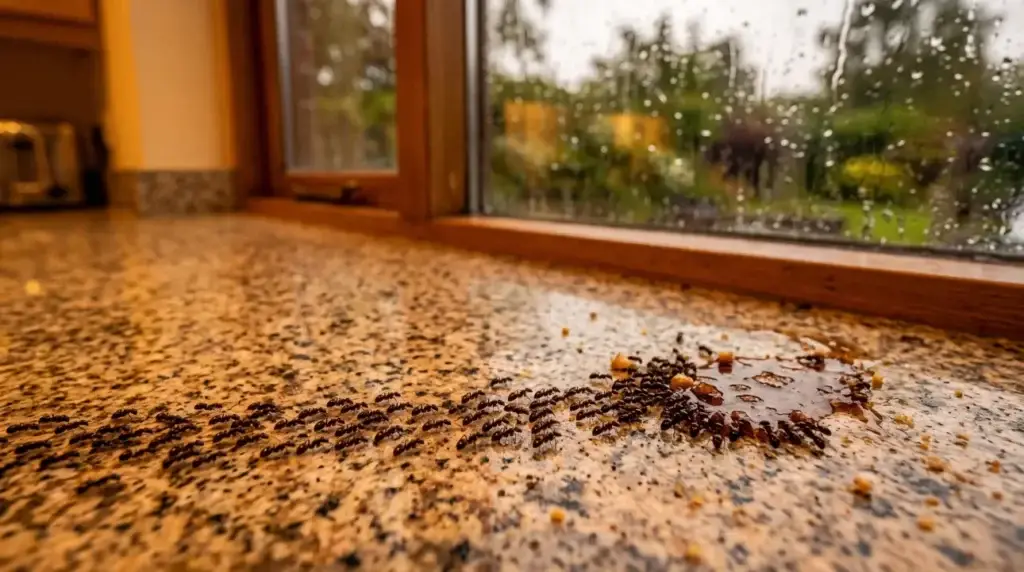
Rain Doesn’t Just Bring Ants Indoors — It Scatters the Colony
October in Jacksonville brings a reliable pattern: a round of heavy rain, followed within a day or two by a noticeable uptick in ant activity along kitchen counters, baseboards, and windowsills. It isn’t a coincidence. Saturated soil floods the shallow underground nests sugar ants and ghost ants build outdoors, and the colony relocates — often straight into the nearest dry structure, which is usually the house next to where the nest used to be.
Once inside, these two species behave differently enough that treating them the same way often backfires.
Sugar Ants vs. Ghost Ants: Why the Difference Matters
- Sugar ants (often called “odorous house ants” locally) are small, dark, and emit a distinct rotten-coconut smell when crushed. They trail aggressively to sugary spills, pet food, and open containers, and a disturbed colony can split into multiple smaller colonies — a behavior called “budding” — making the problem worse if the wrong product is used.
- Ghost ants are pale, nearly translucent, and harder to spot against light-colored countertops or tile. They favor moisture — around sinks, in bathrooms, near leaking pipes — and, like sugar ants, will bud into satellite colonies when stressed by repellent sprays.
This budding behavior is the core reason over-the-counter sprays often make an indoor ant problem worse rather than better: disturbing the trail without eliminating the colony just spreads it into more hiding spots.
Where to Look After a Storm
- Kitchen counters and pantry shelves, especially near sugary or greasy residue
- Baseboards along exterior walls, where ants entering from outside first establish a trail
- Bathroom sinks and under-cabinet plumbing, a ghost ant favorite
- Windowsills and door thresholds, common entry points after soil nearby has flooded
A trail along one of these spots after a storm is a strong signal the outdoor colony has relocated, not just that a few scouts wandered in.
Why Baiting Works and Spraying Often Doesn’t
The goal with sugar ants and ghost ants isn’t to kill the ants you can see — it’s to eliminate the colony and queen those visible ants are reporting back to. That requires:
- Identifying the species correctly, since bait formulations that work well on one don’t always perform on the other
- Placing bait along active trails rather than disrupting them, so workers carry the bait back to the colony
- Avoiding repellent sprays on active trails, which trigger budding and can turn one colony into several
- Sealing entry points identified during the inspection to prevent the next relocation from ending up in the same spot
This targeted approach is part of Crown Pest Control’s quarterly pest control service, which treats seasonal ant activity as part of an ongoing prevention plan rather than a one-time spray.
Getting Ahead of October’s Ant Surge
Because this pattern repeats with nearly every significant fall storm, a single treatment after one rain event often just resets the clock until the next one. Ongoing quarterly treatment addresses the recurring cause rather than responding to each new wave individually.
Crown Pest Control serves Jacksonville and the surrounding First Coast communities with straightforward, no-upsell ant control — find your area here if you’re not sure which service zone you fall into.
Noticing ant trails after the last storm? Contact Crown Pest Control to get ahead of the next one.


