


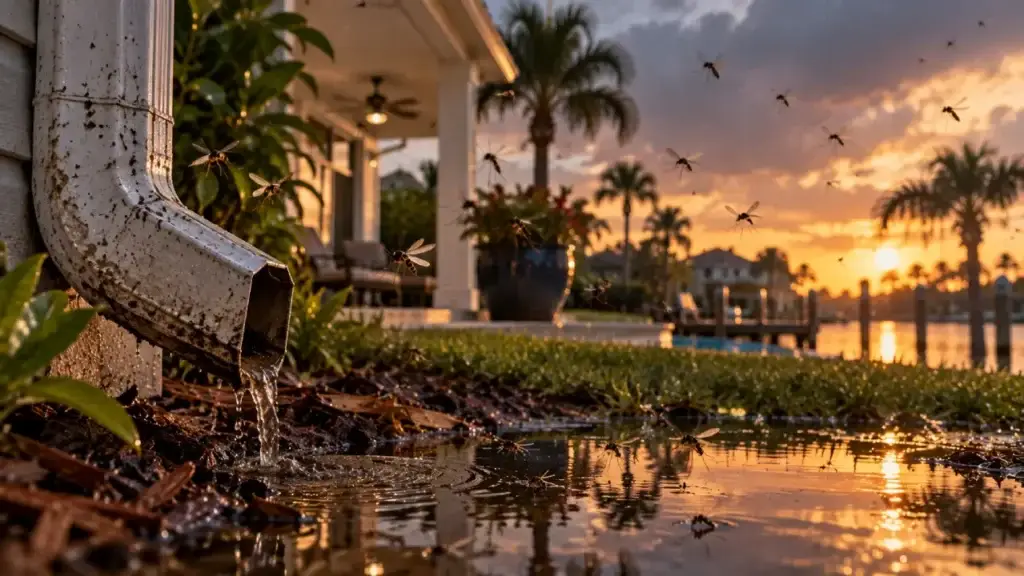
Why Storms Trigger a Mosquito Spike, Not a Slowdown
It’s a common assumption that storm season winds down mosquito activity along with the rain. The opposite tends to happen. Heavy late-summer rain leaves standing water in gutters, low-lying yard sections, potted plant trays, and drainage areas — and floodwater mosquito species can go from egg to biting adult in about a week. A single storm followed by warm, humid days afterward is often enough to trigger a sharp population spike right when outdoor season is trying to wind down comfortably.
For Jacksonville Beach, where patios, pool decks, and outdoor living are the whole point of being there, that timing is exactly backwards from what homeowners want.
Why Jacksonville Beach Sees It Worse Than Inland Areas
A few things about the area compound the problem:
- Proximity to the Intracoastal Waterway. Tidal and brackish water sources nearby support mosquito breeding beyond just yard-level standing water.
- Drainage patterns in beach communities. Sandy soil drains fast in some spots but pools in low-lying areas and swales elsewhere, creating inconsistent wet zones that are easy to miss.
- Dense outdoor living space. Patios, pool areas, and landscaped beds sit close together in many Jacksonville Beach yards, meaning a single untreated wet spot affects the whole outdoor area, not just one corner of the property.
The combination means a storm that causes minor standing water inland can cause a much more noticeable mosquito surge closer to the coast.
Signs the Surge Has Already Started
- Bites increasing during dusk and dawn hours, when mosquito activity peaks
- Visible swarming near shaded areas, dense plantings, or standing water within a day or two of rain
- Standing water in gutters, saucers under potted plants, tarps, or low spots in the yard that hasn’t drained within a few days
- Reduced outdoor use — the clearest sign for most households is simply not wanting to be outside anymore
Floodwater mosquitoes are aggressive daytime biters in addition to dusk activity, which is part of why a post-storm surge feels more disruptive than typical summer mosquito activity.
What Actually Reduces the Population (Not Just Masks It)
Fogging alone treats adult mosquitoes present at the moment of application but does nothing about the next batch hatching from standing water days later. Effective post-storm control combines:
- Identifying and treating standing water sources — gutters, drainage areas, plant trays, and yard low points
- Biological larvicide application in water that can’t be drained, targeting mosquitoes before they reach biting age
- Barrier foliage misting in shaded landscaping and dense vegetation where adult mosquitoes rest during the day
- Follow-up treatment timed to the mosquito life cycle, since a single visit won’t cover eggs laid after the initial service
This is the basis of Crown Pest Control’s mosquito control service: treating both the water sources and the resting adults, not just spraying once and hoping it holds.
Getting Jacksonville Beach Patios Back for Fall
With warm, humid weather continuing well into fall along the coast, a single storm can undo weeks of otherwise mosquito-manageable outdoor living. Treating standing water sources promptly after rain is far more effective than waiting for a full-blown swarm to force the issue.
Crown Pest Control has served Jacksonville Beach and the surrounding coastal communities since 1979, with mosquito reduction built around the drainage and Intracoastal-adjacent conditions specific to the area.
Storm left standing water in the yard, or mosquitoes taking over the patio? Contact Crown Pest Control to schedule mosquito treatment.


