


Not the Same Problem as a Palmetto Bug
Jacksonville homeowners often lump every roach sighting into one category, but German cockroaches are a fundamentally different problem than the palmetto bugs covered in our Atlantic Beach post. Palmetto bugs are an outdoor species that occasionally wanders in looking for shelter. German cockroaches are an indoor species that, once established, rarely leaves — they live, breed, and feed entirely inside the structure, and a female can produce several hundred offspring across her lifespan.
That reproductive speed is why German roach problems tend to go from “a few sightings” to “an infestation” faster than almost any other common household pest, and why fall sightings in Southside and Baymeadows kitchens tend to escalate quickly if left untreated.
Why Fall Brings More Sightings
German cockroaches don’t have a strong seasonal migration pattern the way outdoor pests do — they’re active year-round in a heated, humid indoor environment. What changes in fall is detection: as outdoor temperatures drop, homes run air conditioning less and heating more, shifting humidity patterns indoors in ways that can push existing populations to become more active or visible, particularly around appliances that generate warmth, like refrigerator motors and dishwashers.
Why Southside and Baymeadows Townhomes See It More Than Standalone Homes
- Shared walls and plumbing chases. Townhome and multi-family construction common in Southside and Baymeadows gives German roaches a path between units through shared utility penetrations, meaning a problem in one unit can spread to neighbors without either household doing anything differently.
- Dense kitchen and appliance layouts. Smaller kitchen footprints concentrate the moisture and food sources — behind refrigerators, under sinks, inside cabinet voids — that German roaches depend on.
- Higher turnover rental and rental-adjacent properties. Southside and Baymeadows have a significant share of rental and short-term ownership turnover, and infested belongings or furniture moved in during a transition are one of the most common ways German roaches are introduced to a previously clean unit.
Where They Hide (And Why You Rarely See Them in Daylight)
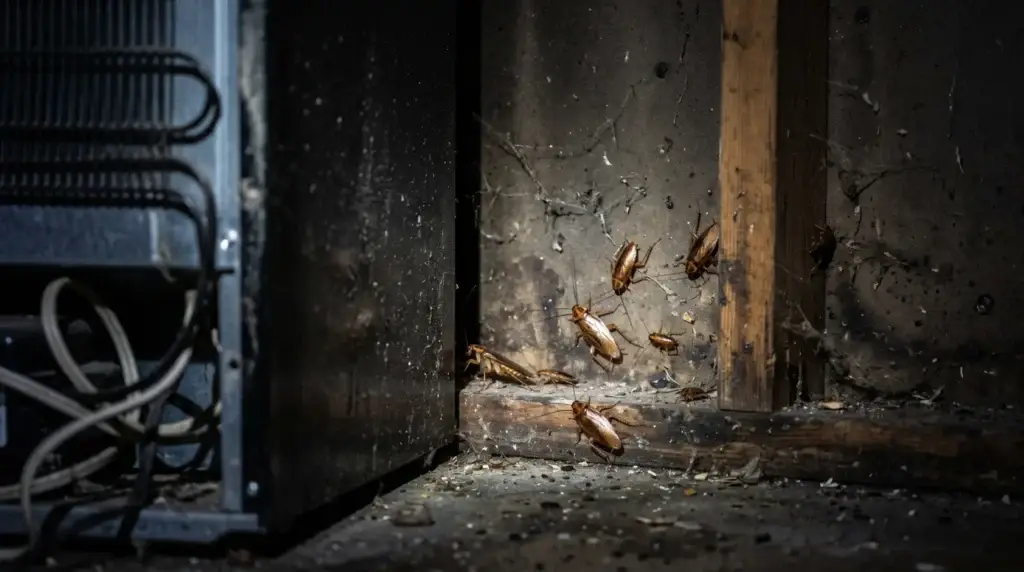
German cockroaches are nocturnal and photophobic — seeing one during the day, rather than just at night, is often a sign the population has outgrown the hiding spots it started in. Typical harborage includes:
- Behind and under refrigerators and dishwashers, drawn to warmth and condensation
- Under sinks and around plumbing penetrations, where moisture collects
- Inside cabinet corners and drawer voids, especially near any food storage
- Electrical outlets and appliance motor housings, which stay warm even when the room doesn’t
A musty, oily odor in a kitchen or pantry — distinct from the mustier smell associated with palmetto bugs — is a common early sign before sightings become frequent.
Why Over-the-Counter Sprays Usually Make It Worse
Store-bought aerosol sprays kill roaches on contact but do nothing to the egg cases (ootheca) hidden deep in cracks and voids, which continue hatching for weeks after a spray treatment. Worse, repellent sprays can trigger “sprayed roach syndrome” — scattering a concentrated population into adjacent units or previously unaffected rooms as roaches flee the treated area rather than die in place. In shared-wall housing, this is often how a single-unit problem becomes a building-wide one.
What Actually Eliminates a German Roach Population
- Identifying all active harborage areas, not just the spots where roaches have been seen
- Gel bait placement in cracks, voids, and appliance motor housings, where roaches carry bait back to untreated members of the population, including the egg-producing females
- Targeting egg cases directly where visible, since bait alone doesn’t eliminate unhatched ootheca
- Follow-up treatment timed to the roach life cycle, since a single visit won’t address eggs that hatch after the initial service
- Sealing shared-wall entry points where feasible, to reduce the chance of reintroduction from an adjacent unit
This is the layered process behind Crown Pest Control’s quarterly pest control service — treatment that accounts for the egg cycle and shared-wall reintroduction risk specific to townhome and multi-family living, rather than a single spray-and-done visit.
What to Expect During a Professional Treatment
A proper German roach treatment starts with a full kitchen and appliance inspection, including pulling back accessible appliances to check motor housings and cabinet voids most homeowners never look behind. Gel bait is placed directly into identified harborage points rather than sprayed broadly, which means there’s little to no odor and no need to empty cabinets or vacate the home during treatment. Most households see a sharp drop in sightings within the first one to two weeks, though full elimination of an established population — including everything still hatching from existing egg cases — typically takes a follow-up visit or two to fully resolve.
Getting Ahead of It Before It Spreads
Because German roaches reproduce quickly and shared-wall housing gives them a path between units, a small problem noticed early is far easier to resolve than one that’s had weeks to spread through a Southside or Baymeadows building. Addressing sightings as soon as they appear — rather than waiting to see if it gets worse — is the difference between a contained treatment and a building-wide one.
Crown Pest Control serves Southside, Baymeadows, and the surrounding Jacksonville communities with straightforward, no-upsell cockroach control — find your area here if you’re not sure which service zone you fall into.
Seeing roaches in daylight, or dealing with a recurring kitchen problem? Contact Crown Pest Control to schedule treatment.


