


A Termite Barrier Isn’t a One-Time Fix
We covered what draws subterranean termites toward a foundation in our post on late-summer rain and termite risk in Nocatee. This post covers the other half of long-term termite protection: what happens after a barrier treatment has already been applied, and why it needs to be checked and sometimes renewed years later.
A liquid soil barrier creates a treated zone around and beneath a foundation that termites can’t detect and avoid, so they pass through it and are eliminated before reaching the structure. That protection isn’t permanent. Soil treatments break down gradually through natural microbial activity, rainfall leaching, and soil disturbance from landscaping or construction nearby — and in established neighborhoods like Southside and Deerwood, where many homes received their original treatment years or even decades ago, a significant number of barriers are due for renewal without anyone having flagged it.
Why Fall Is the Right Season to Check
Termite swarming season in Northeast Florida typically runs from late winter into spring, which means fall is the window to confirm protection is still in place before that activity picks up. Soil conditions are also more consistent in fall than in the saturated, high-rainfall months of late summer, making it easier to get an accurate read on barrier integrity and soil-to-foundation contact points during an inspection.
Why Established Neighborhoods Like Southside and Deerwood Carry More Risk
- Home age. Many Southside and Deerwood properties were built decades ago, meaning original termite treatments — if documented at all — are well past typical renewal timelines.
- Mature landscaping and tree root systems. Established trees and foundation plantings common in older neighborhoods can disturb soil barriers over time as roots grow and shift surrounding soil.
- Additions and renovations. Homes that have had decks, additions, or landscaping work done since the original treatment often have untreated soil along the new construction, creating a gap in otherwise continuous protection.
- Incomplete treatment records. Properties that have changed hands multiple times often come with incomplete or missing documentation of when (or whether) a termite barrier was last applied or renewed.
How to Tell If a Barrier Needs Renewal
Unlike an active infestation, which often shows visible signs, a degraded barrier frequently shows no symptoms at all until termites breach it. A few things are worth checking regardless:
- No documentation or an expired warranty — if there’s no record of a treatment date, or an existing termite service agreement has lapsed, it’s reasonable to assume protection may no longer be active
- Recent landscaping, grading, or construction near the foundation, which can disturb or bypass a previously continuous barrier
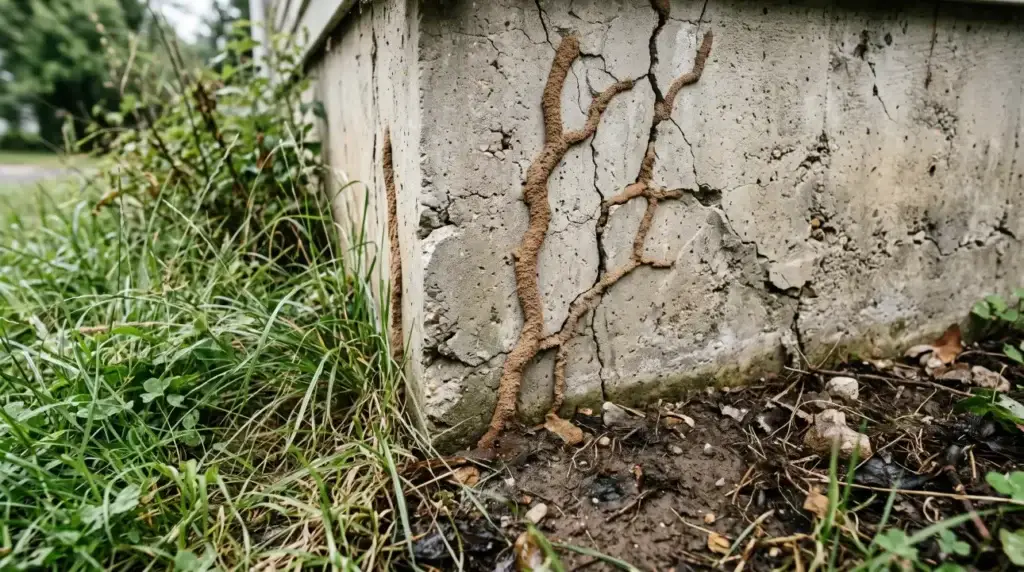
- Visible mud tubes or swarmers, which indicate the barrier has already been breached rather than simply due for renewal
- A home purchase without a recent termite inspection, since buyers often inherit whatever protection (or lack of it) the previous owner had in place
What a Barrier Renewal Actually Involves
- Reviewing existing treatment history, where available, to understand what product was used and when
- Soil and foundation inspection to identify any gaps in coverage, particularly around additions, decks, or recent landscaping
- Reapplying a liquid non-repellent barrier around the full foundation perimeter, including areas that may not have been covered in the original treatment
- Documenting the renewal date going forward, so future inspections have a clear baseline rather than starting from scratch
This is the renewal process behind Crown Pest Control’s foundation treatment — not simply reapplying product on a schedule, but confirming the barrier is actually continuous before calling the job complete.
What Happens If a Barrier Is Never Renewed
Termite damage develops slowly and often stays hidden behind drywall, under flooring, or within structural framing for months or years before it becomes visible. By the time sagging floors, hollow-sounding wood, or visible frass (termite droppings) show up, repair costs are typically far higher than the cost of a routine barrier renewal would have been. For older Southside and Deerwood homes in particular, a lapsed barrier isn’t a cosmetic oversight — it’s an open window that’s been quietly available for however long the treatment has been inactive.
Protecting Southside and Deerwood Homes Going Into Spring Swarm Season
Because barrier degradation happens gradually and invisibly, the only reliable way to know protection is still active is to have it checked — and fall, before swarm season ramps up, is the ideal time to do that. For homes without clear treatment records, or any home where the original barrier is more than a few years old, a renewal inspection now closes the gap before it becomes a structural problem.
Crown Pest Control has provided termite inspections and barrier treatments across Jacksonville — including Southside, Deerwood, and the surrounding established neighborhoods — since 1979, with straightforward, no-upsell service and clear documentation going forward.
Not sure when your home was last treated for termites, or don’t have records at all? Contact Crown Pest Control to schedule an inspection.


