


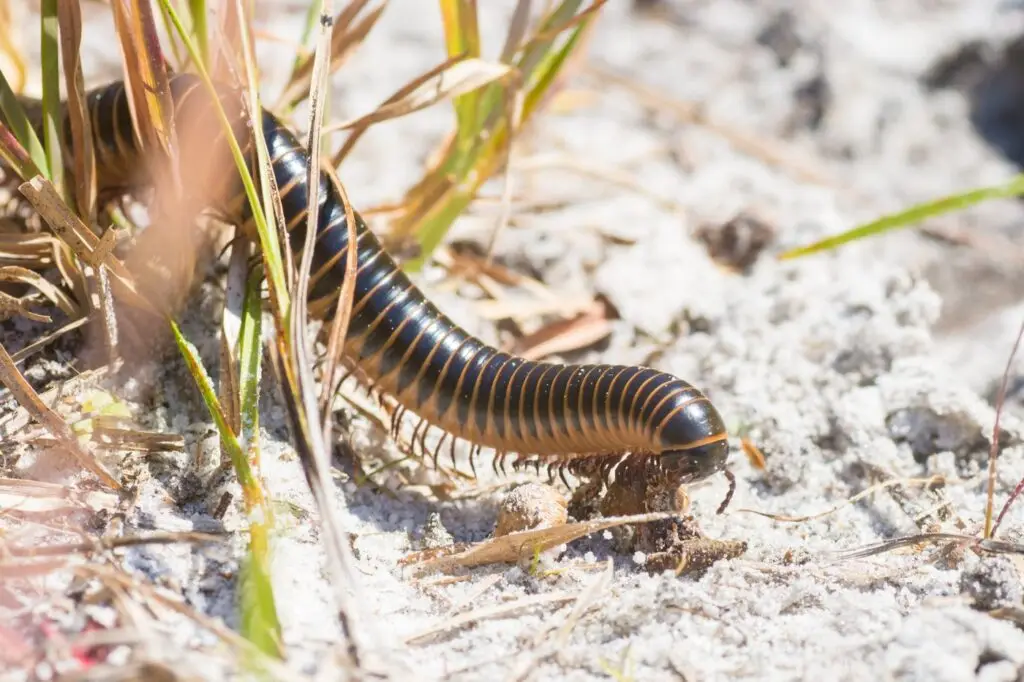
If you open the garage this week and find a few dark, curled up “thousand leggers” on the floor, you’re not alone, and you don’t need to panic. Soggy soil can push millipedes out of the yard and up onto slabs and walls, and they look a lot worse than they are.
What the forecast says this week
The National Weather Service in Jacksonville expects persistent showers today, Tuesday, with waves of heavy rainbands coming onshore off the Atlantic through Friday. Its forecast for Jacksonville calls for a 70 to 80 percent chance of rain today through Wednesday. A Flood Watch is in effect for St. Johns and Flagler counties from this afternoon through Friday evening, with 4 to 6 inches of rain likely in parts of the coast and localized totals up to 7 to 12 inches possible. There’s also a High Risk for rip currents at all area beaches and a High Surf Advisory starting this evening.
News4JAX says rain chances stay around 70 to 80 percent Wednesday through Friday, with gusts near 30 mph, and the weather should start improving Sunday.
If you live in a low spot or a neighborhood that floods, keep an eye on Weather Service alerts and remember its Turn Around Don’t Drown advice: it’s never safe to drive or walk into floodwater. That matters a lot more than any bug.
Why rain brings millipedes closer to the house
Here’s the pest part. UF/IFAS Extension in Nassau County explains that when soil gets water-saturated, millipedes come up to the surface and head for higher ground, which often means slabs, foundations and siding. The UF/IFAS guide to pillbugs, centipedes, millipedes and earwigs adds that after rains or in cold weather, large numbers of millipedes sometimes move into buildings. They can climb foundation walls and get in through any small opening.
That doesn’t mean every rainy week brings a wave of them. Plenty of homes won’t see any. But a few days of steady rain is a good time to know what you’re looking at.
Millipede or centipede?
They’re easy to mix up, and the difference matters a little.
Millipedes are slow, rounded and wormlike, with two pairs of legs on most body segments. They feed on decaying plant material like leaf litter, mulch and grass clippings. When you bother one, it usually coils up tight, and some kinds give off a smelly fluid. UF/IFAS Extension says they don’t bite, sting or spread disease, and they don’t damage furniture, food or the house. They need moisture to survive, so the ones that wander into a dry house usually don’t last long.
Centipedes are flatter, faster and have one pair of legs per segment. They hunt insects and spiders, mostly at night, and indoors they tend to turn up in damp bathrooms and closets. UF/IFAS notes that the small local species can’t get through human skin, but larger ones can give a painful bite, so use a dustpan rather than your hand.
A heavy indoor showing of either one usually means there are a lot of them right outside.
What you can do now
- Sweep or vacuum them up. UF/IFAS recommends a broom and dustpan or a vacuum for the ones that get inside. You don’t need a spray for a few millipedes on the garage floor.
- Keep the garage door down. Especially during and right after heavy rain.
- Check door sweeps and thresholds. Gaps under exterior doors and sliding glass doors are common ways in. Replace worn sweeps and weatherstripping.
- Thin the mulch. UF/IFAS suggests keeping mulch only 2 to 4 inches deep so it stays dry most of the time. We’d also pull it back a few inches from the foundation.
- Clear what holds moisture. Rake leaf litter and grass clippings away from the walls. Move boards, bricks, flower pots and stored stuff that sit right against the house.
- Help the water go somewhere. Clean gutters and make sure downspouts carry water away from the slab.
- Ease up on the sprinklers. With this much rain coming, your lawn doesn’t need extra water.
- Seal small gaps. Caulk around window and door frames and where pipes and wires come through the wall.
Where DIY runs out
For most homes, a few millipedes after a big rain is a nuisance that fades once things dry out. UF/IFAS Extension in Nassau County doesn’t recommend chemical treatment for millipedes that are only outside, and we agree that cleanup and drainage come first. Treatment works best after you’ve cut down the damp, leafy spots they live in.
If you’re sweeping up dozens every day, they keep showing up after the weather dries out, or you’re also finding centipedes, earwigs or pill bugs inside, that’s a sign there’s a large population around the house. That’s a good time to have someone look at the whole property. If you do use any over the counter product, read the label first and follow it exactly.
How we handle millipedes and centipedes
Millipedes, centipedes and pill bugs are covered on our residential quarterly plan, along with earwigs and crickets. On each visit, our technicians walk the outside of the house looking for new activity, entry points and moisture problems. We treat around the foundation, doorways, windows and the mulch and landscape beds where these pests live, and treat inside where pests hide and travel, like kitchens, bathrooms and garages. Before we leave, we tell you what we found and what you can do to help, like thinning mulch or trimming shrubs back from the siding.
If millipedes keep finding their way into your garage or house once the rain clears, get in touch with us and let us know where you’re seeing them.
Sources
Current conditions (sourced):
- National Weather Service Jacksonville, Area Forecast Discussion, 550 AM EST November 17, 2026: persistent showers today, waves of heavy rainbands through Friday, 70 to 80 percent rain chances for Jacksonville today through Wednesday, High Risk for rip currents and a High Surf Advisory, rain chances dropping by Sunday.
- National Weather Service Jacksonville, Flood Watch, 1129 PM EST November 16, 2026: Flood Watch for St. Johns and Flagler counties from Tuesday afternoon through Friday evening, with 4 to 6 inches of rain likely and localized totals up to 7 to 12 inches possible.
- News4JAX, Rain is in the forecast, pack the poncho (Katie Garner, November 17, 2026): 70 to 80 percent rain chances Wednesday through Friday, gusts near 30 mph, improving weather Sunday.
- National Weather Service, Turn Around Don’t Drown: it is never safe to drive or walk into floodwater.
Pest facts (sourced):
- UF/IFAS, Pillbugs, Sowbugs, Centipedes, Millipedes, and Earwigs (ENY-221, reviewed February 2025): identification, millipedes moving into buildings after rains or in cold weather, no damage to homes or food, centipede bites from larger species, broom and vacuum removal, mulch 2 to 4 inches deep, removing decaying vegetation near the house.
- UF/IFAS Extension Nassau County, small black creatures on sidewalks (garden millipedes): saturated soil pushing millipedes onto slabs, foundations and siding, no chemical treatment recommended for millipedes outdoors.
- UF/IFAS Extension Sarasota County, The Spooky Bug Brigade: Millipedes: millipedes need moisture, waterlogged soil forcing them out, sweeping them up, sealing gaps with weatherstripping.
General advice: linking this week’s rain to watching for millipedes, the checklist on garage doors, gutters, sprinklers and sealing, and the guidance on when to call a professional are our own recommendations.
Photo: Florida ivory millipede (Chicobolus spinigerus) by Andrew Cannizzaro, licensed CC BY 2.0, via Wikimedia Commons. Resized from the original. Taken at St. Marks Headwaters Greenway near Tallahassee, not at a Jacksonville home.
